Carbon Sequestration Dynamics in Rapid-Rotation Plantation Ecosystems
As global climate frameworks tighten, the forestry sector faces intense scrutiny regarding the net carbon impacts of commercial harvesting. A common misconception is that unmanaged secondary forests represent the absolute ceiling for carbon storage. However, recent empirical data from our Sumatran concessions suggests a more nuanced reality: rapid-rotation managed plantation ecosystems, when operated under strict circular stewardship, can drive significantly higher net carbon sequestration rates over time.
Understanding the Active Carbon Sink
Young, rapidly growing trees absorb carbon dioxide at a vastly accelerated rate compared to mature, climax forests. An Acacia mangium or Eucalyptus pellita tree in its first 3 to 5 years of growth operates as a high-octane carbon sink. During this vegetative phase, photosynthesis rates are maximized as the canopy builds structural biomass. In contrast, an unmanaged climax forest reaches a dynamic equilibrium where carbon absorbed by photosynthesis is almost entirely offset by carbon released through organic decay and soil respiration.
"Our data indicates that a sustainably harvested and replanted concession sequestered up to 2.4 times more net carbon per hectare annually over a 20-year timeline than adjacent unmanaged buffer zones."
The Harvested Carbon Pool
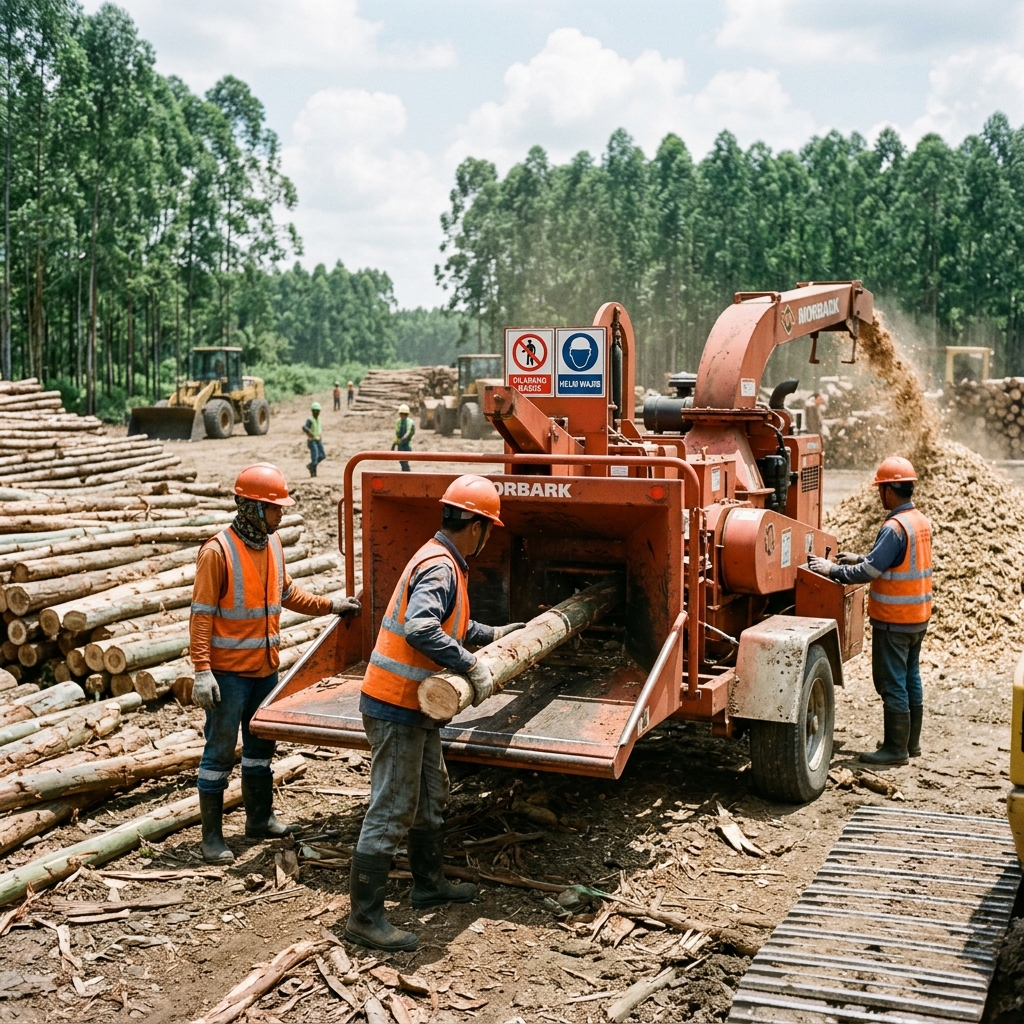
Where does the harvested carbon go? This is the critical factor in calculating the true climate benefit of industrial wood products. When wood is processed into wood chips for paper manufacturing or biomass fuels, the carbon is handled in two distinct cycles:
- Long-term storage: Wood fibers converted into pulp, paper, and medium-density fiberboards (MDF) lock carbon away for years or decades, effectively acting as an extension of the forest carbon pool.
- Coal displacement: Biomass wood chips burned in utility-grade power boilers release carbon, but this carbon is short-cycle. It is quickly re-absorbed by the next generation of seedlings planted on the same harvest site. Crucially, it displaces fossil carbon (coal) that would otherwise be permanently added to the atmosphere.
A Balanced Rotation Strategy
To maximize this sequestration effect, PT. Hasian Bersama Sejahtera employs a strict 5-to-7-year rotation cycle across our operating concessions. This cycle ensures that a constant mosaic of age classes is maintained. While one sector is harvested, three others are in peak growth phases, maintaining a continuous net absorption profile across the entire concession. Furthermore, our 4:1 replant ratio ensures that forest density is preserved, keeping soil erosion and carbon release through soil disturbance to an absolute minimum.