Industrial Wood Chip Specifications: What Utilities Actually Need
Procuring wood chips for large-scale industrial boilers and pulp mills is a technical process. A slight deviation in specifications can lead to severe operational issues, including boiler clinkering, reduced thermal efficiency, and conveyor blockages. In this guide, we outline the primary quality parameters that international buyers evaluate and explain how PT. Hasian Bersama Sejahtera meets these requirements.
The Critical Parameters
Four primary metrics define the quality of industrial-grade wood chips:
- Moisture Content (MC): The single most important factor. Freshly cut wood has a moisture level of 50-60%. For biomass boilers, moisture should ideally be controlled between 35-45% to maximize net calorific value. Higher moisture wastes heat energy on water evaporation, while excessively dry wood presents a dust and fire hazard during shipping.
- Size Distribution (Fraction): Industrial feed systems require uniform sizes. Standard specifications demand that 90% of chips fall within the 10mm to 45mm range. "Overs" (oversized pieces) block screens and feed screws, while "fines" (sawdust) clog air filters and cause uneven burning.
- Bark and Root Content: Bark has high silica and ash content, which causes slagging inside the boiler. It also contains acids that degrade pulp quality. Premium grade chips require bark content to be strictly below 2% by weight.
- Calorific Value: The energy yield, measured in Net Calorific Value (NCV) or Gross Calorific Value (GCV). High-quality Indonesian Acacia and Eucalyptus wood chips yield around 3,800 to 4,200 kcal/kg (dry basis).
Quality Management at Hasian Bersama Sejahtera
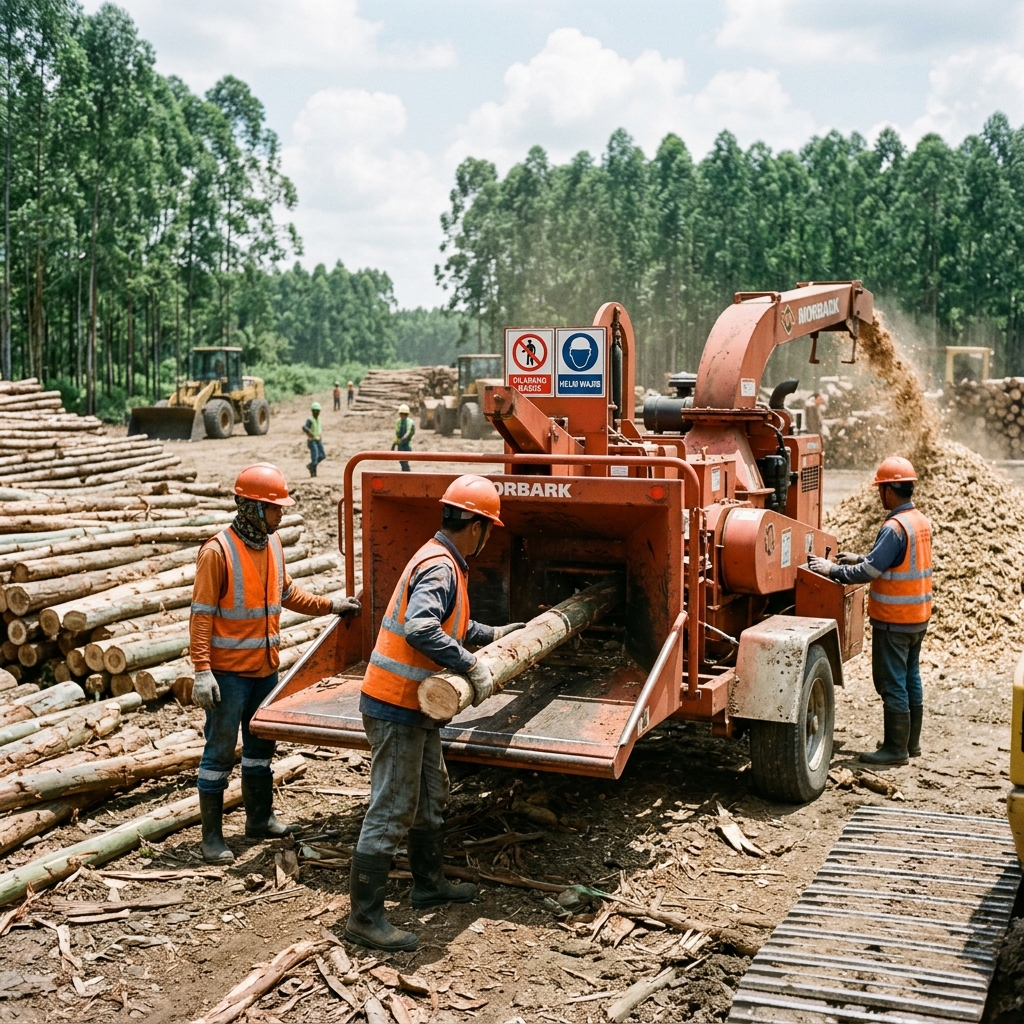
To guarantee these specifications, we operate 5 industrial chipper units with integrated screening systems at our Sumatran and Banten facilities. We conduct moisture tests and size sieve tests on every batch before loading. This continuous quality feedback loop allows us to issue certified lab analysis reports for every shipment, providing our clients with absolute confidence in their fuel consistency.